
Do Ticks Die in Winter, and Are They Still Active?
Short answer: Not reliably. Pennsylvania's health department says winter weather does not kill ticks, and CDC says adult blacklegged (deer) ticks may be searching for a host any time winter temperatures are above freezing. Richard Ostfeld of the Cary Institute says the adults hunker down under leaf litter when it freezes and can reactivate in a midwinter warm spell.
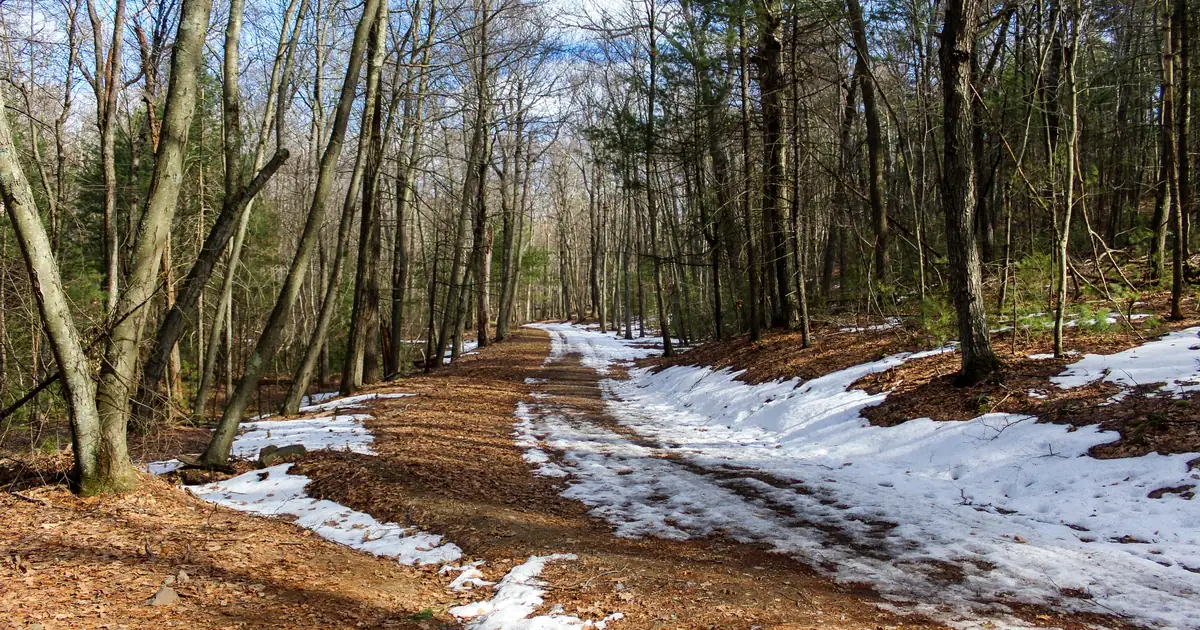
Do ticks die in winter?
Brunner, Killilea and Ostfeld (Journal of Medical Entomology, 2012) followed blacklegged tick nymphs outdoors from October through May at two sites in New York State. Regardless of winter conditions, more than 80 percent survived at both.
Burtis and colleagues (Parasitology, 2019) tracked 4,320 engorged blacklegged tick larvae under field conditions in New York State. Mortality was low during the winter and rose in spring and early summer, along with the ticks' energy use.
CDC's life cycle page says most ticks that need a different host at each stage will die because they don't find one for their next feeding. Cary's Ostfeld says that by May or so, almost all adults still without a host have used up their reserves and died.
Which ticks are out in winter, and do people still get bitten?
| Tick and stage | What sources say about winter |
|---|---|
| Blacklegged (deer) tick, adults | CDC: may be out searching for a host any time winter temperatures are above freezing. |
| Blacklegged tick, larvae and nymphs | New York State Department of Health: newly molted nymphs remain dormant until the following spring. Cary Institute: unlikely to activate until day length and temperature both increase dramatically. |
| Blacklegged ticks in California | California Department of Public Health: adults are more active from fall through early spring. |
| Lone star tick and American dog tick | National Park Service's Northeast Temperate Network: mostly inactive in fall and winter. Raghavan and colleagues (PLoS One, 2021): the two most abundant ticks collected in January and February 2017 in Kansas, Missouri, Oklahoma and Arkansas, lone star first. |
The Cary Institute says blacklegged ticks can be active all year in the southern United States, and that even in the Northeast and upper Midwest they can bite during any warmish spell in January, February and beyond.
Using data from CDC's National Syndromic Surveillance Program, Marx and colleagues (MMWR, 2021) found emergency department visits for tick bites in 2017 through 2019 averaged 466 in January, 802 in February and 875 in December. May averaged 12,263.
At what temperature do ticks become active?
The sources do not agree on one number.
| Source | What the source says | Applies to |
|---|---|---|
| CDC | May be out searching for a host any time winter temperatures are above freezing | Blacklegged tick adults |
| Minnesota Department of Health | May be active above freezing with little to no snow cover | Ticks |
| New York State Department of Health, Be Tick Free guide | Can be active any time the temperature is above freezing. The same guide also says: on winter days when ground temperatures are above 45 degrees F | Ticks |
| Illinois Department of Public Health | Can be active on winter days when ground temperatures are about 45 degrees F | Ticks |
| National Park Service | Activity decreases only below 35 degrees F | Deer ticks |
| TickEncounter, University of Rhode Island | Can be active above freezing when not covered by snow, most likely when the ground is also thawed | Blacklegged tick adults |
| Cary Institute | At least several degrees above freezing (Ostfeld, 2025 Q and A). Any winter or spring day above freezing (2019 feature) | Blacklegged adults that found no host in the fall |
| Duffy and Campbell, 1994 | An apparent threshold of questing (host-seeking) activity at 4 degrees C | Adult blacklegged ticks, winter experiments on Long Island, New York |
| Schulze and colleagues, 2001 | Blacklegged adults observed questing as low as minus 0.6 degrees C, below the threshold reported previously. No adult lone star ticks collected below 4.4 degrees C | Adult blacklegged and lone star ticks |
TickEncounter's winter check: is the ground unfrozen, and is it above freezing? If yes to both, it says, you may be at risk for a blacklegged tick encounter.
Do ticks hibernate?
Adult blacklegged ticks do not, according to the Connecticut Agricultural Experiment Station's Tick Management Handbook (2007), which says they may be active on warm winter days and the following spring.
New York State's health department says larvae drop off their host into the leaf litter, molt into nymphs and remain dormant until the following spring. A 2019 Cary Institute feature says females that fed in the fall overwinter in soil pores or under leaf litter, slowly converting the blood into eggs.
Cary's Ostfeld says ticks that researchers place in small mesh bags on the surface of the ground typically don't survive winter very well, while ticks that can get under leaf litter or into soil pores survive better.
Does snow protect ticks, or protect you?
For the ticks, the studies differ. Volk and colleagues (Ticks and Tick-borne Diseases, 2022) found blacklegged tick survival over winter was not significantly different between southern and northern Maine, most likely, they write, because snowpack protected against low air temperatures.
Over three years in Connecticut and Maine, Linske and colleagues (Insects, 2019) found unfed blacklegged tick nymphs survived significantly better where leaf litter and snow were left alone than where leaf litter, or both, were removed. Snow's inconsistent effects, they write, did not provide the same protection leaf litter did in their study.
Burtis and colleagues (Journal of Medical Entomology, 2016) reduced the snow cover over engorged blacklegged tick larvae in a hardwood forest and saw no effect: 44.2 percent overwintered successfully in the untouched plots, 44.7 percent in the snow-removal plots.
For you, Minnesota's health department, describing blacklegged ticks, says it is possible to find an active adult on a warm winter day if there is little to no snow cover and temperatures rise above freezing.
Cary's Ostfeld says he does not encounter ticks in snowy woods and assumes snow is a barrier to ticks moving up from the ground onto vegetation, but that he has no direct evidence for this.
What temperature kills ticks?
For winter to kill deer ticks, the National Park Service says, they must remain exposed to very cold temperatures, 10 degrees F or less, for several days in a row. It calls that unusual, in part because ticks seldom stay exposed in winter months.
Linske and colleagues, summarizing previous studies, write that temperatures lower than minus 10 degrees C and relative humidity lower than 80 percent will result in significant mortality. Fieler and colleagues (Comparative Biochemistry and Physiology, 2021) found cold tolerance in larvae of six tick species ranged from minus 15 to minus 24 degrees C in 2-hour exposures, changes they note are likely more abrupt than ticks would experience on a daily scale.
For laundry, CDC says to tumble dry clothes on high heat for 10 minutes to kill ticks on dry clothing. Cold and medium temperature water, CDC says, will not kill ticks.
Does a cold winter mean fewer ticks next spring?
Not in more than 30 years of monitoring in New York State. Ostfeld and colleagues (PNAS, 2026) found the abundance of blacklegged tick nymphs was not correlated with seasonal temperature extremes. It was correlated with the prior abundance of white-footed mice, which in turn was driven by acorn production by red oak trees.
For a given density of mice, nymphs were less abundant in warmer than in colder years, with roughly 45 percent fewer in the warmest. The authors measured warmth over the entire year and say the mechanisms remain to be fully evaluated.
In a Cary Institute Q and A, Ostfeld says nymphs come out up to a few weeks earlier in warmer years, but that his team has not found evidence of more nymphs after a mild winter.
For the months themselves, see when each tick stage peaks through the year.
What can you do on a mild winter day?
Maine CDC said in December 2023 that deer ticks can be active any time the temperature is above freezing, so the risk of tick bites stretches through the winter. CDC says tick exposure can occur year-round, though ticks are most active from April to September.
CDC's steps, in the order of a walk:
- Avoid wooded and brushy areas with high grass and leaf litter. Walk in the center of trails.
- Treat boots, clothing and gear with products containing 0.5 percent permethrin.
- Use EPA-registered insect repellents containing DEET, picaridin, IR3535, oil of lemon eucalyptus, para-menthane-diol or 2-undecanone.
- Do a full body check when you return, including from your own backyard.
- Shower soon after being outdoors, which CDC says may help wash off unattached ticks.
- Examine pets, coats and daypacks. Ticks can ride into the home on clothing and pets, then attach to a person later.
We keep a separate page on which repellent actives list ticks.
Maine CDC's steps, from an October 2025 release, include 15 minutes in the dryer on high heat before washing. CDC's dryer figure, for dry clothing, is 10 minutes.
Common questions
Can my dog pick up a tick in winter?
Yes, in a thaw, according to TickEncounter, which says to continue protecting your pet because you never know when a thaw will let ticks become active again. CDC says to check pets daily and to talk to your veterinarian about tick prevention products for your dog.
Can ticks survive the winter inside your house?
CDC names one tick that can infest indoor spaces like homes and kennels: the brown dog tick. Illinois's health department says this tick is tropical in origin and does not survive Illinois winters outdoors.
How long do ticks live?
About two to three years for blacklegged ticks, says Minnesota's health department, with only up to three blood meals. CDC's How Lyme Disease Spreads page gives the blacklegged tick a life cycle of 2 to 3 years.
Can you get Lyme disease in winter?
Yes. CDC says most Lyme disease cases are reported in the summer months, though cases occur year-round. Maine CDC's December 2023 release says to talk to a health care provider if you experience symptoms of tickborne disease. Here is how to remove an attached tick.
What is the winter tick?
A separate species, Dermacentor albipictus, found commonly on moose, elk and deer, according to the Connecticut Agricultural Experiment Station's handbook, which says it will occasionally feed on humans. Illinois's health department says it is rarely encountered by campers or hikers. The National Park Service says winter ticks are not interested in humans. On people, the three differ.
About Longsleeve
Longsleeve is an EPA-registered picaridin lotion (EPA Reg. No. 101457-1). It repels mosquitoes and ticks for up to 14 hours. Its label says it repels ticks that may transmit Lyme disease.
Sources
- Cary Institute of Ecosystem Studies, Ticks in the winter: Your questions answered (Q and A with Richard Ostfeld, January 7, 2025). https://www.caryinstitute.org/news-insights/feature/ticks-winter-your-questions-answered
- Pennsylvania Department of Health, Learn More About Ticks (no date printed, read November 24, 2026). https://www.pa.gov/agencies/health/diseases-conditions/infectious-disease/vectorborne-diseases/tick-diseases/learn-more
- CDC, Blacklegged Tick Surveillance (updated and reviewed May 14, 2026). https://www.cdc.gov/ticks/data-research/facts-stats/blacklegged-tick-surveillance.html
- CDC, Preventing Lyme Disease (updated May 21, 2026). https://www.cdc.gov/lyme/prevention/index.html
- Brunner JL, Killilea M, Ostfeld RS. Overwintering survival of nymphal Ixodes scapularis (Acari: Ixodidae) under natural conditions. Journal of Medical Entomology, 2012 (PMID 23025177). https://pubmed.ncbi.nlm.nih.gov/23025177/
- Burtis JC, Fahey TJ, Yavitt JB. Survival and energy use of Ixodes scapularis nymphs throughout their overwintering period. Parasitology, 2019 (PMID 30638173). https://pubmed.ncbi.nlm.nih.gov/30638173/
- CDC, Tick Lifecycles (updated October 11, 2024). https://www.cdc.gov/ticks/about/tick-lifecycles.html
- CDC, Where Ticks Live (updated July 30, 2025). https://www.cdc.gov/ticks/about/where-ticks-live.html
- New York State Department of Health, Be Tick Free: A Guide for Preventing Lyme Disease, Publication 2825 (revised July 2023). https://www.health.ny.gov/publications/2825/
- Cary Institute of Ecosystem Studies, Are ticks active in winter months? (Winter Tick Risk feature, February 21, 2019). https://www.caryinstitute.org/news-insights/feature/winter-tick-risk
- California Department of Public Health, Lyme Disease (page last updated November 26, 2025). https://www.cdph.ca.gov/Programs/CID/DCDC/Pages/LymeDisease.aspx
- National Park Service, Northeast Temperate Network, Species Spotlight: Deer Tick (last updated January 15, 2025). https://www.nps.gov/articles/species-spotlight-deer-tick.htm
- Raghavan RK, Koestel ZL, Boorgula G, et al. Unexpected winter questing activity of ticks in the Central Midwestern United States. PLoS One, 2021 (PMID 34762706). https://pubmed.ncbi.nlm.nih.gov/34762706/
- Marx GE, Spillane M, Beck A, Stein Z, Powell AK, Hinckley AF. Emergency Department Visits for Tick Bites, United States, January 2017 to December 2019. MMWR Morbidity and Mortality Weekly Report, 2021 (PMID 33914718; full text and table, PMC8084121). https://pmc.ncbi.nlm.nih.gov/articles/PMC8084121/
- Minnesota Department of Health, Preventing Tickborne Disease (last updated May 31, 2024). https://www.health.state.mn.us/diseases/tickborne/prevention.html
- Illinois Department of Public Health, Common Ticks (no date printed, read November 24, 2026). https://dph.illinois.gov/topics-services/environmental-health-protection/structural-pest-control/common-ticks.html
- University of Rhode Island, TickEncounter Resource Center, Winter Tick Activity (no date printed, read November 24, 2026). https://web.uri.edu/tickencounter/tick-notes/winter-tick-activity/
- Duffy DC, Campbell SR. Ambient air temperature as a predictor of activity of adult Ixodes scapularis (Acari: Ixodidae). Journal of Medical Entomology, 1994 (PMID 8158624). https://pubmed.ncbi.nlm.nih.gov/8158624/
- Schulze TL, Jordan RA, Hung RW. Effects of selected meteorological factors on diurnal questing of Ixodes scapularis and Amblyomma americanum (Acari: Ixodidae). Journal of Medical Entomology, 2001 (PMID 11296842). https://pubmed.ncbi.nlm.nih.gov/11296842/
- Connecticut Agricultural Experiment Station, Tick Management Handbook, Revised Edition, Bulletin No. 1010 (K. C. Stafford III; published Fall 2007). https://portal.ct.gov/-/media/caes/documents/publications/bulletins/b1010pdf.pdf
- Volk MR, Lubelczyk CB, Johnston JC, Levesque DL, Gardner AM. Microclimate conditions alter Ixodes scapularis (Acari: Ixodidae) overwinter survival across climate gradients in Maine, United States. Ticks and Tick-borne Diseases, 2022 (PMID 34826798). https://pubmed.ncbi.nlm.nih.gov/34826798/
- Linske MA, Stafford KC, Williams SC, Lubelczyk CB, Welch M, Henderson EF. Impacts of Deciduous Leaf Litter and Snow Presence on Nymphal Ixodes scapularis (Acari: Ixodidae) Overwintering Survival in Coastal New England, USA. Insects, 2019 (PMID 31366124). https://pubmed.ncbi.nlm.nih.gov/31366124/
- Burtis JC, Ostfeld RS, Yavitt JB, Fahey TJ. The Relationship Between Soil Arthropods and the Overwinter Survival of Ixodes scapularis (Acari: Ixodidae) Under Manipulated Snow Cover. Journal of Medical Entomology, 2016 (PMID 26487243). https://pubmed.ncbi.nlm.nih.gov/26487243/
- Minnesota Department of Health, Ticks (last updated June 30, 2025). https://www.health.state.mn.us/diseases/tickborne/ticks.html
- Fieler AM, Rosendale AJ, Farrow DW, et al. Larval thermal characteristics of multiple ixodid ticks. Comparative Biochemistry and Physiology Part A, 2021 (PMID 33794367). https://pubmed.ncbi.nlm.nih.gov/33794367/
- CDC, Preventing Tick Bites (updated August 28, 2024). https://www.cdc.gov/ticks/prevention/index.html
- Ostfeld RS, LaDeau SL, Oggenfuss K, Canham CD, Fargione M, Winchcombe RJ, Keesing F. The ecology of Lyme disease: Long-term data, surprises, and a synthesis. Proceedings of the National Academy of Sciences, 2026 (PMID 42607219). https://pubmed.ncbi.nlm.nih.gov/42607219/
- Maine CDC (Maine Department of Health and Human Services), news release: Maine CDC Encourages Continued Precautions Against Tick Bites This Winter (December 7, 2023). https://www.maine.gov/dhhs/news/maine-cdc-encourages-continued-precautions-against-tick-bits-winter-thu-12072023-1200
- Maine CDC (Maine Department of Health and Human Services), news release: Maine CDC Encourages Tick Bite Prevention This Fall (October 17, 2025). https://www.maine.gov/dhhs/news/maine-cdc-encourages-tick-bite-prevention-fall-fri-10172025-1200
- CDC, Preventing Ticks on Pets (updated May 15, 2024). https://www.cdc.gov/ticks/prevention/preventing-ticks-on-pets.html
- CDC, How Lyme Disease Spreads (updated September 24, 2024; reviewed November 2, 2026). https://www.cdc.gov/lyme/causes/index.html
- National Park Service, Climate Change at Isle Royale: Winter Tick (no date printed, read November 24, 2026). https://www.nps.gov/articles/000/climate-change-at-isle-royale-winter-tick.htm
Last reviewed 2026-11-24 · every claim on this page is sourced above