
How Long Do Mosquitoes Live? Life Cycle, Eggs, and Winter
Short answer: CDC says adult mosquitoes live for about 2 to 4 weeks, depending on the species, humidity, temperature and other factors, and that females often live longer than males. CDC gives Aedes and Culex 7 to 10 days from egg to adult. In one New York City study, some hibernating Culex females survived to April to emerge in the spring.
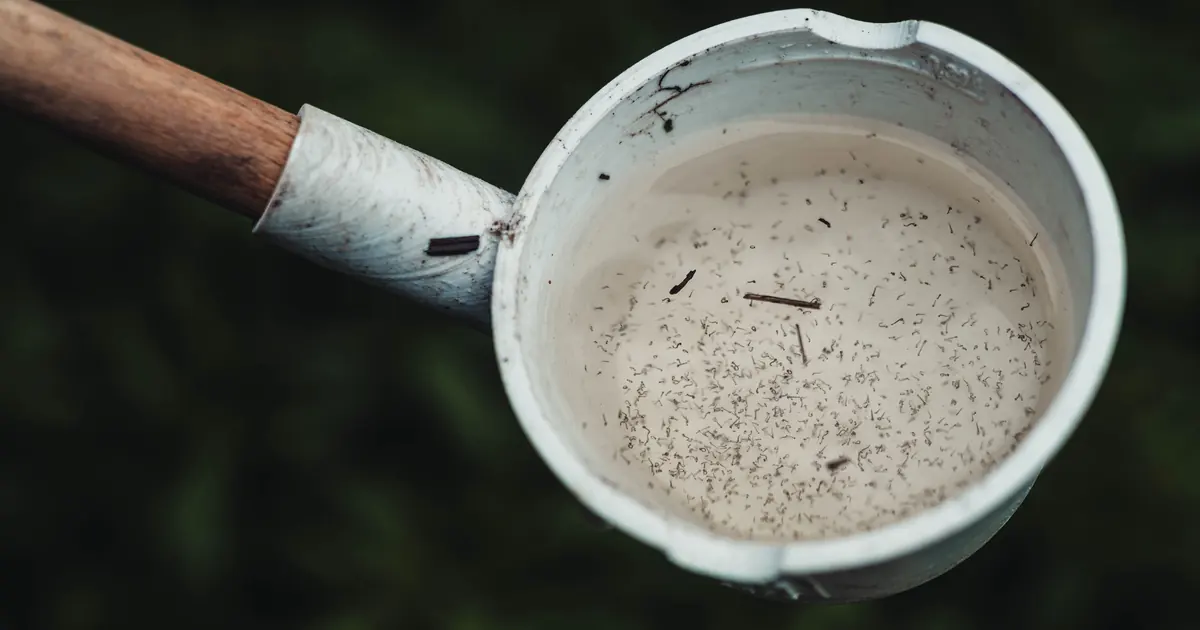
How long does a mosquito live?
About 2 to 4 weeks as an adult. That is CDC's figure, and CDC says it depends on the species, humidity, temperature and other factors. CDC adds that females often live longer than males.
What are the stages of the mosquito life cycle, and how long does each take?
EPA says all mosquitoes share a four-stage life cycle: egg, larva, pupa, adult. How long the trip takes depends on the mosquito, and CDC gives the timing for three groups.
| Mosquito | Where the eggs go | What CDC says about the eggs | Egg to adult |
|---|---|---|---|
| Aedes (Aedes aegypti and the Asian tiger mosquito, Aedes albopictus) | Inner walls of containers with water, above the waterline | Can survive drying out for up to 8 months | 7 to 10 days |
| Culex | Rafts of 100 to 300 eggs that float on the water | Most hatch within 48 hours | 7 to 10 days |
| Anopheles | Laid one at a time directly on water, where they float | Do not tolerate drying out | 10 to 14 days |
Source: CDC's Aedes, Culex and Anopheles pages and CDC's Culex life cycle fact sheet.
CDC's Aedes fact sheet says Aedes larvae live in water and develop into pupae in as few as 5 days, and that the pupae develop into adult, flying mosquitoes in 2 to 3 days.
EPA says that, depending on conditions, the life cycle can range from 4 days to as long as a month.
Do only female mosquitoes bite?
Yes. CDC says only female mosquitoes bite people and animals to get a blood meal, and that females need a blood meal to produce eggs.
CDC says both sexes feed on flower nectar and fruit juices. The female's mouthpart pierces skin and sucks out blood; the male's is not strong enough to pierce skin, and CDC says males do not feed on blood. We cover how a female finds the person she bites separately.
How long can mosquito eggs survive without water?
CDC says the eggs of Aedes aegypti and Aedes albopictus can survive drying out for up to 8 months, and can even survive a winter in the southern United States.
CDC says the larvae hatch when water, from rain or a sprinkler, covers the eggs. California's Contra Costa Mosquito and Vector Control District says some Aedes species hatch in installments: not all the eggs hatch immediately after a single flooding, and some may remain dormant for several years.
None of this applies to every mosquito. CDC says Anopheles eggs do not tolerate drying out.
Where do mosquitoes go in winter?
It depends on the mosquito. Some get through winter as eggs, and others as adult females in sheltered places.
Aedes. For Aedes aegypti and Aedes albopictus, the sources describe eggs: CDC says the eggs can even survive a winter in the southern United States. A 1994 laboratory study in the Journal of Medical Entomology found that eggs of temperate Asian tiger mosquitoes (Aedes albopictus) were more cold-hardy than eggs of Aedes aegypti.
Culex. Here the sources describe adult females waiting in diapause, which California's Contra Costa district calls a form of hibernation. CDC's 1993 arbovirus surveillance guidelines say some Culex pipiens populations enter winter diapause, while Culex quinquefasciatus does not.
A 2010 study of hibernating Culex pipiens in New York City, published in the Journal of the American Mosquito Control Association, found that parous females there, those that had already laid eggs, enter winter shelters in the fall and experience significant mortality during the winter, and that some survived to April to emerge in the spring.
California's Contra Costa district gives its own calendar: adult females seek out sheltered locations like caves, culverts or underground storm drains in late October or November, and remain there until the first sign of warmer weather, often in late February or early March. We cover when mosquito season ends region by region.
Anopheles. California's Contra Costa district groups Anopheles with Culex: it says both go into diapause during the coldest part of the year. A 2011 study in the Journal of Medical Entomology, at a site in Alabama, found that Anopheles punctipennis was among the species that overwinter as females, collected from hollow trees and from emergence traps placed over ground holes.
The authors of a 2001 report in CDC's journal Emerging Infectious Diseases write that approximately 0.04 percent of the overwintering Culex mosquitoes collected at Fort Totten, in New York City, carried viable West Nile virus, and 0.1 percent contained West Nile viral RNA. The 2010 study found further evidence of local overwintering of the virus in diapausing Culex pipiens, in its words "albeit at very low rates." We cover West Nile in New York City separately.
How long do mosquitoes live in your house?
No CDC page or study we found gives a lifespan for a mosquito indoors. What CDC does say is that adult lifespan depends on the species, humidity, temperature and other factors.
CDC says adult mosquitoes live indoors and outdoors. On its Aedes page, CDC says Aedes aegypti mosquitoes live indoors and outdoors, while Aedes albopictus live outdoors.
Mosquitoes rest in dark, humid places like under sinks, in showers, in closets, under furniture or in the laundry room, CDC says. CDC adds that mosquitoes entering your house from outdoors can start laying eggs indoors.
A 2018 systematic review and pooled survival analysis in Parasites and Vectors concluded that humidity is associated with mortality risk in adult female Aedes aegypti in controlled settings, and that data are limited for Aedes albopictus. That is a finding about controlled experiments, and we would not turn it into a number of days for the one in your bedroom.
Why does a mosquito's lifespan matter for disease?
Because transmission comes after a delay, according to WHO's vector-borne diseases fact sheet, dated September 2024: many vectors are bloodsucking insects that ingest disease-producing microorganisms during a blood meal and later transmit them to a new host, after the pathogen has replicated.
WHO's dengue fact sheet, dated August 2025, calls the time from ingesting the virus to actual transmission to a new host the extrinsic incubation period, and says it takes about 8 to 12 days when the ambient temperature is 25 to 28 degrees C. That 2025 WHO figure is for dengue at that temperature only.
The 2024 WHO fact sheet adds that often, once a vector becomes infectious, it is capable of transmitting the pathogen for the rest of its life, during each subsequent bite or blood meal.
CDC's 1993 arbovirus surveillance guidelines say it is more likely that older females have fed, acquired virus, and lived long enough to become infective. We cover West Nile virus separately.
What does the life cycle mean for your yard?
CDC says Aedes aegypti and Aedes albopictus do not fly long distances, and will only fly a few blocks in their lifetime. CDC says Culex mosquitoes do not fly long distances either, but have been known to fly up to 2 miles.
The water worth checking first is the water nearest you. The routine lives in the weekly standing-water checklist.
Where Longsleeve fits
For the adults that do find you: Longsleeve is an EPA-registered picaridin lotion (EPA Reg. No. 101457-1). It repels mosquitoes and ticks for up to 14 hours. It is fragrance-free, with nine disclosed ingredients.
Common questions
Do mosquitoes die after they bite?
No. CDC says that after blood feeding, a female Anopheles mosquito rests for a few days while the blood digests and the eggs develop, then lays the eggs in water sources. WHO's 2024 vector-borne diseases fact sheet says that often, once a vector becomes infectious, it can transmit the pathogen during each subsequent bite for the rest of its life.
Do mosquitoes die in winter?
In the 2010 New York City study, hibernating Culex pipiens females that had already laid eggs experienced significant mortality during the winter, and some survived to April to emerge in the spring. The eggs of Aedes aegypti and Aedes albopictus are a separate case: CDC says they can even survive a winter in the southern United States.
How fast can a puddle produce mosquitoes?
CDC's Culex fact sheet says most Culex eggs hatch within 48 hours. CDC says an Aedes or Culex egg takes 7 to 10 days to develop into an adult mosquito. EPA's range for the whole life cycle runs from 4 days to as long as a month, depending on conditions.
Where do mosquitoes lay eggs?
CDC says Aedes aegypti and Aedes albopictus females lay eggs on the inner walls of containers with water, above the waterline. A female Culex lays eggs that stick together in a raft of 100 to 300, which floats on the water, and a female Anopheles lays eggs one at a time directly on water, CDC says.
Sources
- CDC, About Mosquitoes, page dated May 14, 2024. https://www.cdc.gov/mosquitoes/about/index.html
- CDC, Life Cycle of Aedes Mosquitoes, page dated April 16, 2024. https://www.cdc.gov/mosquitoes/about/life-cycle-of-aedes-mosquitoes.html
- CDC fact sheet, Mosquito Life Cycle: Aedes aegypti and Ae. albopictus, CS330074A, June 29, 2022. https://www.cdc.gov/mosquitoes/pdfs/AedesLifeCycle-P.pdf
- CDC, About Culex Mosquitoes, page dated Sept. 3, 2025. https://www.cdc.gov/mosquitoes/about/culex-mosquitoes.html
- CDC fact sheet, Mosquito Life Cycle: Culex pipiens, Cx. quinquefasciatus, and Cx. tarsalis, CS310257-A, July 11, 2022. https://www.cdc.gov/mosquitoes/pdfs/CulexLifeCycle-P.pdf
- CDC, Life Cycle of Anopheles Mosquitoes, page dated May 14, 2024. https://www.cdc.gov/mosquitoes/about/life-cycle-of-anopheles-mosquitoes.html
- CDC, Mosquito Control at Home, page dated April 16, 2024. https://www.cdc.gov/mosquitoes/mosquito-control/mosquito-control-at-home.html
- CDC, Guidelines for Arbovirus Surveillance Programs in the United States, Moore CG et al., April 1993. https://stacks.cdc.gov/view/cdc/6183/cdc_6183_DS1.pdf
- Nasci RS et al., West Nile Virus in Overwintering Culex Mosquitoes, New York City, 2000, Emerging Infectious Diseases, 2001;7(4). https://wwwnc.cdc.gov/eid/article/7/4/01-7426_article
- EPA, Mosquito Life Cycle, last updated January 23, 2026. https://www.epa.gov/mosquitocontrol/mosquito-life-cycle
- EPA, General Information about Mosquitoes, last updated July 6, 2026. https://www.epa.gov/mosquitocontrol/general-information-about-mosquitoes
- WHO, Dengue and severe dengue fact sheet, 21 August 2025. https://www.who.int/news-room/fact-sheets/detail/dengue-and-severe-dengue
- WHO, Vector-borne diseases fact sheet, 26 September 2024. https://www.who.int/news-room/fact-sheets/detail/vector-borne-diseases
- Contra Costa Mosquito and Vector Control District (California), Where Do Mosquitoes Go in Winter? https://www.contracostamosquito.gov/where-do-mosquitoes-go-in-winter
- Schmidt CA et al., Effects of desiccation stress on adult female longevity in Aedes aegypti and Ae. albopictus: results of a systematic review and pooled survival analysis, Parasites and Vectors, 2018. https://pubmed.ncbi.nlm.nih.gov/29695282/
- Andreadis TG, Armstrong PM, Bajwa WI, Studies on hibernating populations of Culex pipiens from a West Nile virus endemic focus in New York City: parity rates and isolation of West Nile virus, Journal of the American Mosquito Control Association, 2010. https://pubmed.ncbi.nlm.nih.gov/21033052/
- Burkett-Cadena ND et al., Winter biology of wetland mosquitoes at a focus of eastern equine encephalomyelitis virus transmission in Alabama, USA, Journal of Medical Entomology, 2011. https://pubmed.ncbi.nlm.nih.gov/21936314/
- Hanson SM, Craig GB Jr, Cold acclimation, diapause, and geographic origin affect cold hardiness in eggs of Aedes albopictus, Journal of Medical Entomology, 1994. https://pubmed.ncbi.nlm.nih.gov/8189409/
Last reviewed 2026-11-16 · every claim on this page is sourced above