Get first dibs

What's biting you,
and what it's carrying.

A field guide to the mosquitoes and ticks that hunt people: which ones spread which diseases, where they live, when they bite, how they find you, and how the repellent options actually compare. Print it, screenshot it, send it to your sister who hikes.

Every fact below is sourced to the CDC or the EPA · no number on this page comes from us · sources listed in full at the bottom

Know your bloodsuckers.

Seven carriers worth recognizing. Each card is the same kind of summary a public-health office would post on a wall: what it carries, when it bites, where it lives, and when it is busiest. Disease lists are the ones the CDC names for each genus.

Mosquitoes

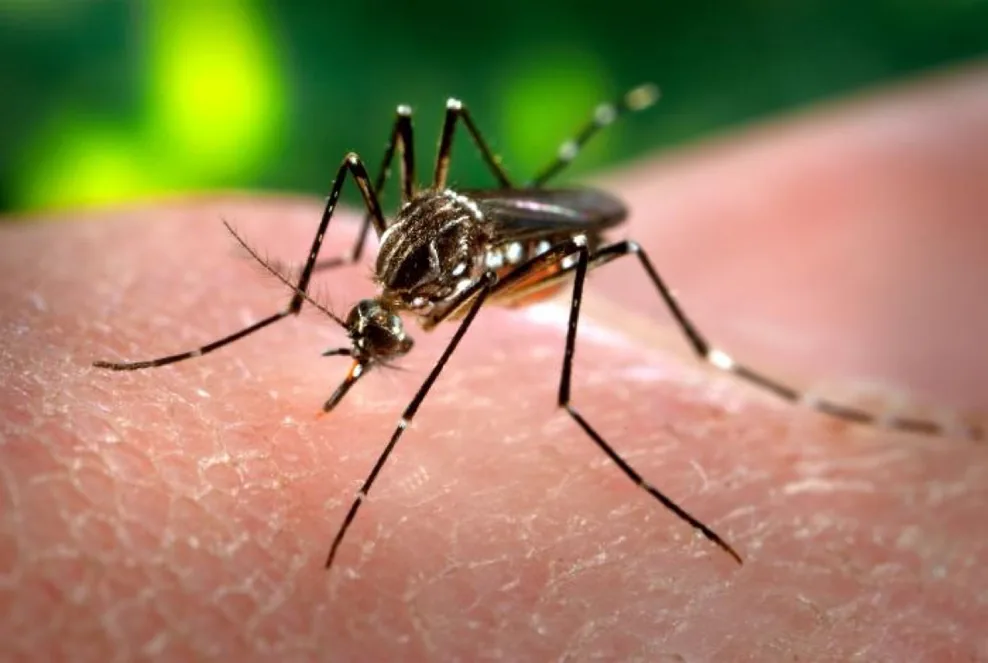
Aedes aegypti mosquito, a yellow fever, dengue and Zika vector, feeding on human skin

Yellow fever & tiger mosquitoes

Mosquito

Aedes aegypti & Aedes albopictus

Carries
Dengue, Zika, chikungunya, yellow fever
Bites
Daytime, mostly morning and late afternoon
Where
Southern and eastern U.S., tropics worldwide
Season
Warm months; year round in the tropics

Aggressive, low-flying, and fond of ankles. They breed in tiny amounts of standing water, a bottle cap is enough. Source: CDC, About Mosquitoes

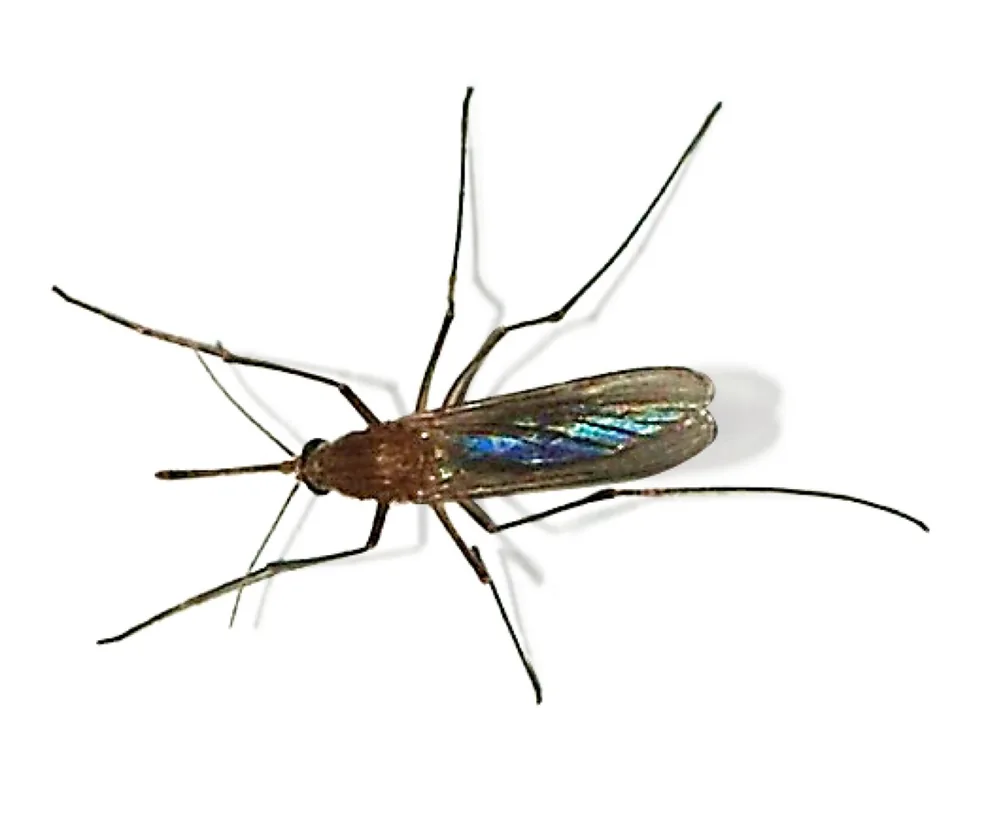
Culex mosquito, the common house mosquito and a West Nile virus vector

Common house mosquito

Mosquito

Culex species

Carries
West Nile virus, St. Louis encephalitis
Bites
Evening and through the night
Where
Across the continental United States
Season
Summer into early fall

West Nile is the leading cause of mosquito-borne disease in the continental U.S. About 8 in 10 infected people feel nothing; roughly 1 in 150 develop serious illness. Source: CDC, West Nile Virus

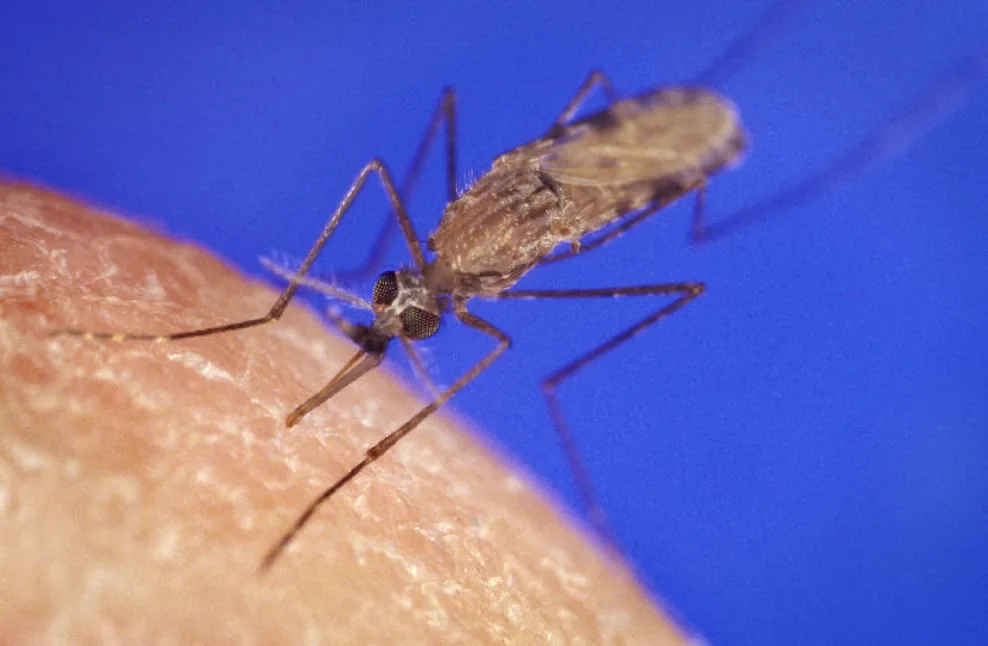
Anopheles mosquito, the malaria vector, feeding on skin in its tail-up posture

Malaria mosquito

Mosquito

Anopheles species

Carries
Malaria
Bites
Night, dusk to dawn
Where
Tropics and subtropics; historically the U.S. South
Season
Year round where it stays warm

Malaria is rare inside the U.S. today but remains one of the most serious risks for travelers. Check your destination before you go. Source: CDC, Malaria

Ticks

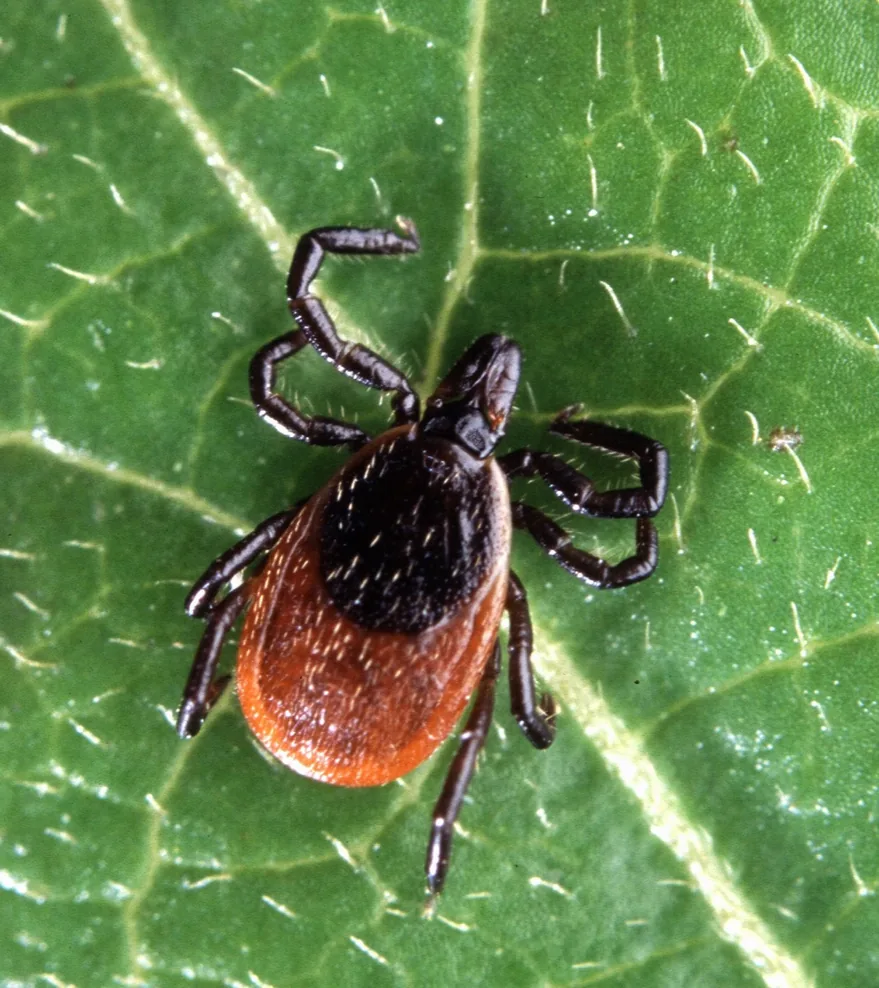
Blacklegged deer tick, Ixodes scapularis, on a green leaf

Blacklegged (deer) tick

Tick

Ixodes scapularis & Ixodes pacificus

Carries
Lyme disease, anaplasmosis, babesiosis, Powassan virus
Bites
Any time it reaches skin; attaches and stays
Where
Northeast, upper Midwest, and Pacific coast
Season
Nymphs late spring to summer; adults in fall

The U.S. records about 476,000 Lyme diagnoses a year. A tick usually has to stay attached 36 to 48 hours before it can pass the Lyme bacteria, so a same-day check matters. Source: CDC, Lyme Disease

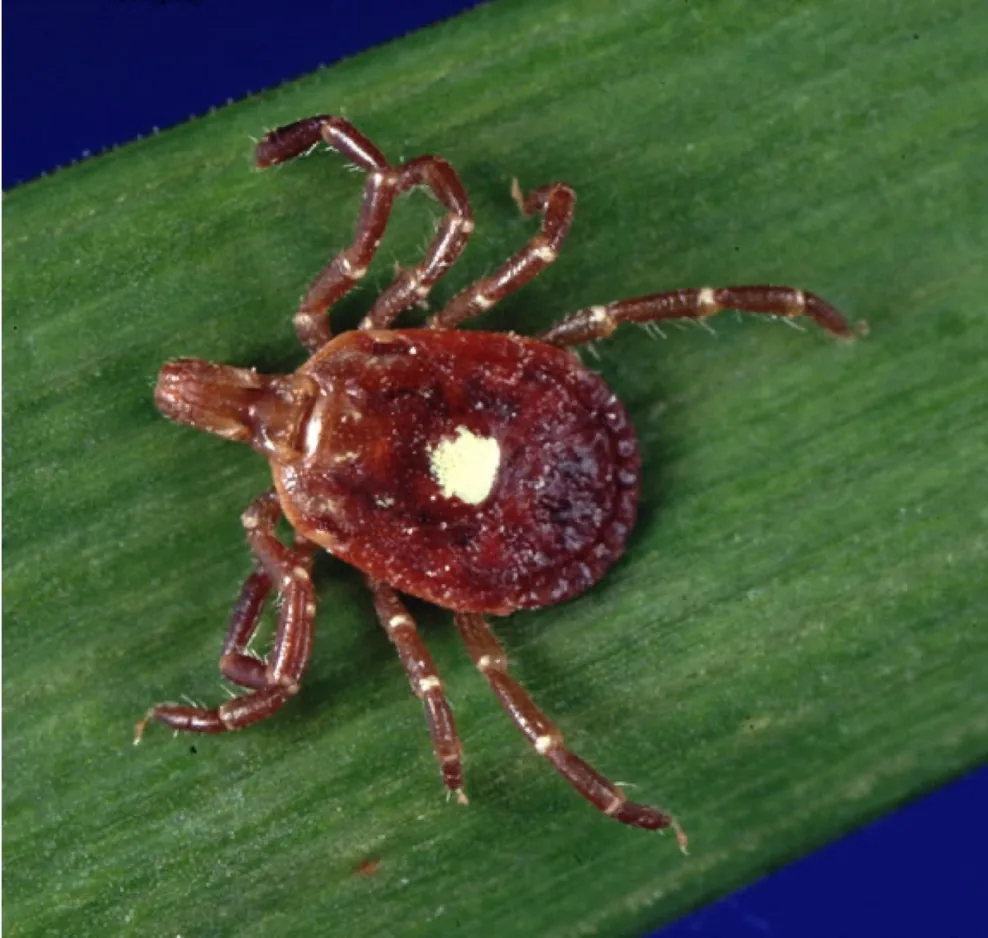
Female lone star tick, Amblyomma americanum, with the single white dot on its back

Lone star tick

Tick

Amblyomma americanum

Carries
Ehrlichiosis, STARI, alpha-gal syndrome
Bites
Active hunter; will crawl toward a host
Where
Southeastern and eastern U.S., spreading north
Season
Spring through late summer

The single white dot is on the female. Its bite can set off alpha-gal syndrome, a lasting allergy to red meat. Source: CDC, Lone Star Tick

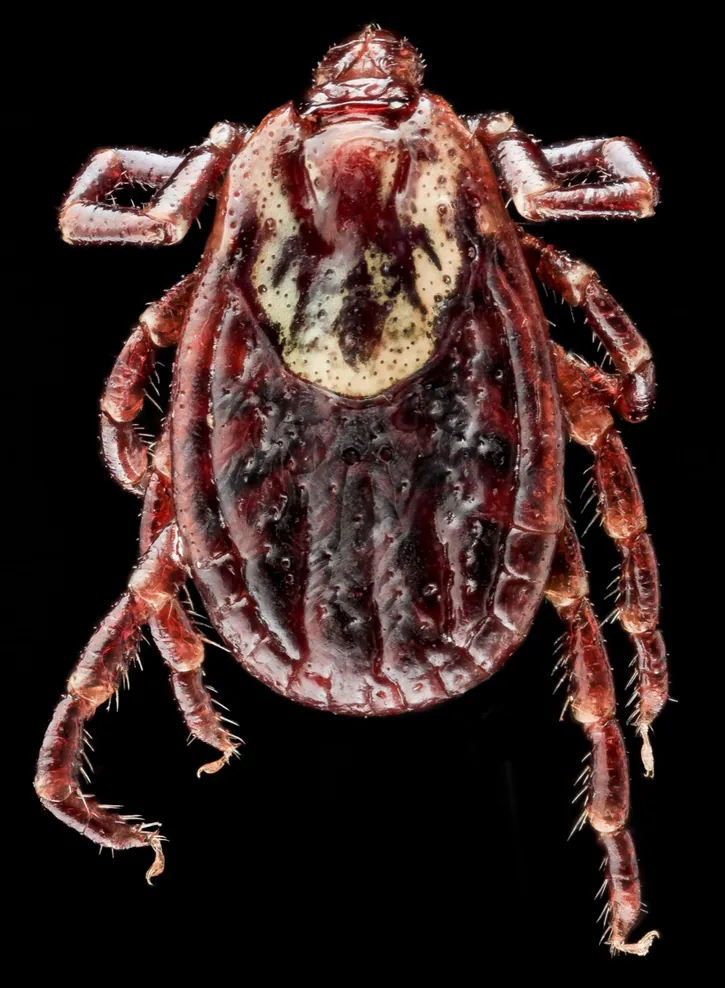
American dog tick, Dermacentor variabilis, with its ornate patterned shield

American dog tick

Tick

Dermacentor variabilis

Carries
Rocky Mountain spotted fever, tularemia
Bites
Waits in grassy, open areas near trails
Where
East of the Rockies and parts of the Pacific coast
Season
Spring and summer

Rocky Mountain spotted fever moves fast and can be fatal without prompt antibiotics. Early treatment is the whole game. Source: CDC, Rocky Mountain Spotted Fever

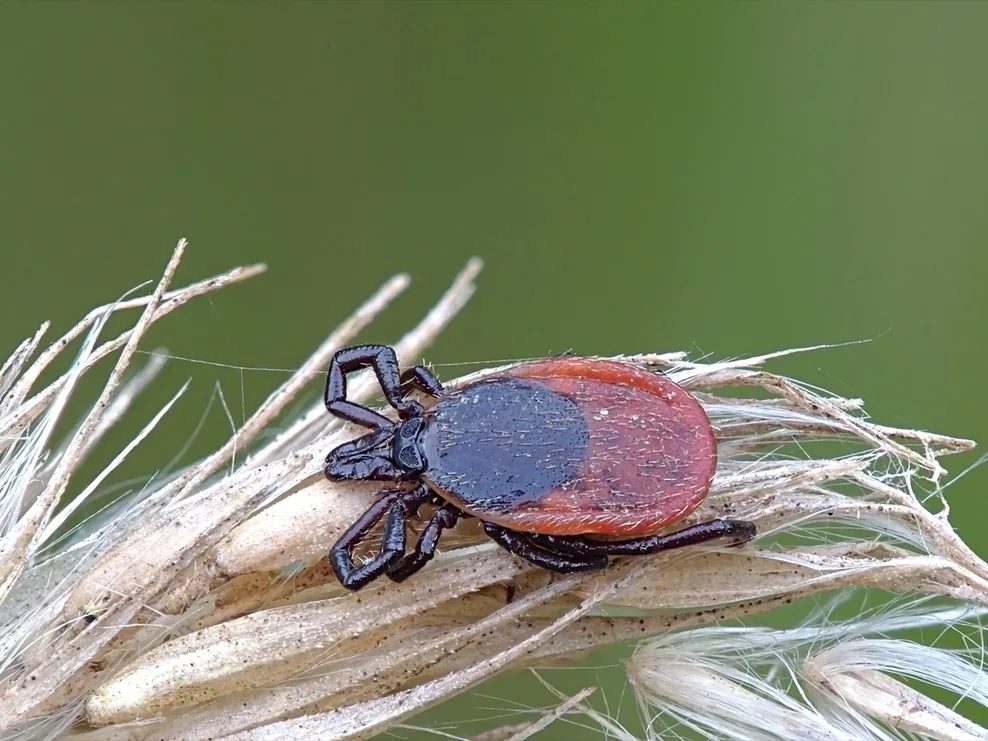
Castor bean tick, Ixodes ricinus, questing on a dry grass stem

Castor bean tick

Tick

Ixodes ricinus

Carries
Tick-borne encephalitis, Lyme borreliosis
Bites
Quests from low vegetation, then attaches
Where
Europe and parts of Asia
Season
Spring through autumn

Headed to forested or rural Europe? Tick-borne encephalitis has a vaccine worth asking a travel clinic about. Source: CDC Travelers' Health · ECDC

Specimen photographs via Wikimedia Commons. Aedes, Anopheles and lone star tick: CDC / James Gathany. Deer tick: Scott Bauer, USDA. Culex: Alvesgaspar (CC BY-SA 3.0). American dog tick: Sam Droege (CC BY 2.0). Castor bean tick: W.alter (CC BY-SA 4.0).


Every year, the map gets bigger.

This is not the bug problem your parents had. The range keeps moving.

Tick-borne disease in the United States has more than doubled over the last two decades. Milder winters and longer warm seasons let ticks survive farther north and stay active more of the year, so the blacklegged ticks that carry Lyme keep turning up in counties that never used to report them.

The numbers behind that line: the CDC estimates about 476,000 Americans are diagnosed and treated for Lyme disease every year. Babesiosis, a malaria-like infection from the same tick, climbed roughly nine percent a year between 2015 and 2022. And in 2026 the CDC flagged emergency-room visits for tick bites running higher than usual for the season.

Mosquitoes are moving too. The Asian tiger mosquito, an aggressive daytime biter that can carry dengue and Zika, is projected to find suitable habitat across far more of the northeastern United States as it warms: from roughly five percent of the region's land today toward an estimated sixteen percent by 2035.

None of this is a reason to stay inside. It is a reason to wear something that actually works, every time you go out, without having to think about it. That is what Longsleeve is for.


You are a signal. They are antennas.

Four cues, in roughly the order a mosquito uses them.

i.

Carbon dioxide. Every breath you let out is a flare. Mosquitoes track CO2 plumes from a distance; a tick waiting on a blade of grass reads the CO2 of an animal passing by.

ii.

Body heat and moisture. Warm, slightly damp skin in the 34 to 37 C range reads as "host." Cooler surfaces nearby get ignored.

iii.

Sweat and skin chemistry. Lactic acid, ammonia, and other compounds in sweat tell a mosquito you are an animal, not a rock. This is why exercise and warm evenings draw more bites.

iv.

Then contact. Ticks can't fly or jump. They wait with their front legs out, a behavior the CDC calls questing, and grab whatever brushes past. Mosquitoes close the last stretch by sight and land.

"Ticks find their hosts by detecting animals' breath and body odors, or by sensing body heat, moisture, and vibrations." CDC, Preventing Tick Bites. Mosquitoes use the same cues plus carbon dioxide and vision.

Picaridin works on the front end of that chain. It sits on the surface of your skin and jams the odorant receptors the insect uses to read those cues. The CO2 is still in the air and your skin is still warm; they just can't follow the trail to you. Nothing is killed. They land, find nothing worth biting, and drift off.

Longsleeve is 20% picaridin, EPA-registered for up to 14 hours against mosquitoes and ticks. EPA Reg. No. 101457-1. That is a registered duration claim with efficacy data on file, not a number off a marketing deck.


Four repellent options, side by side.

All four are real choices on a drugstore shelf. The CDC lists EPA-registered repellents as the ones with evidence behind them. Durations vary with concentration, sweat, and heat, so these are typical ranges from the EPA and CDC, not guarantees. No brand names, because the active ingredient is what does the work.

Typical performance by active ingredient. Source: EPA and CDC repellent guidance.
Active ingredient Typical protection Smell Won’t damage gear & plastics Youngest age (CDC)
Picaridin (20%) Up to 14 hours vs mosquitoes and ticks None Yes. No effect on plastics or synthetics CDC guidance: 2 months
DEET Up to about 10 hours at higher concentrations Noticeable; varies by concentration No. Labels caution it can damage plastics, vinyl, and some synthetics CDC guidance: 2 months
Oil of lemon eucalyptus / PMD Up to about 6 hours Strong lemon-eucalyptus scent Yes Not for children under 3 years
Citronella (oil) Up to about 2 hours, frequent reapplication Strong citrus scent Yes Follow product label

The CDC recommends EPA-registered repellents with one of these actives: DEET, picaridin, IR3535, oil of lemon eucalyptus (OLE), para-menthane-diol (PMD), or 2-undecanone. Plant oils like citronella are not reviewed by the EPA for efficacy the way registered actives are, so the duration on the bottle has less data behind it. Sources: EPA, Skin-Applied Repellent Ingredients · CDC, Avoid Bug Bites · AAP, repellent guidance for children

The active in the top row is the one Longsleeve uses: 20% picaridin, fragrance-free, all nine ingredients disclosed. See the tube →


Five things that actually lower your risk.

Repellent is step one. These are the rest, straight from the CDC.

A.Do a tick check, same day.

After you're outdoors, check the whole body, especially the warm hidden spots: scalp, behind the ears, armpits, belly button, waistband, groin, and behind the knees. Shower within two hours. Tumble-dry your clothes on high heat for 10 minutes to kill any stowaways.

Source: CDC, Preventing Tick Bites

B.Remove a tick the boring way.

Fine-tipped tweezers, grab as close to the skin as you can, and pull straight up with steady pressure. Don't twist, don't use a match, don't paint it with anything. Clean the bite, and watch for rash or fever over the next few weeks.

Source: CDC, Tick Removal

C.Reapply on the label's clock.

Sweat, swimming, and towel-drying all take repellent off early. Follow the reapplication window on the label, and go sooner if you've been working hard or got soaked. A long-duration active means fewer reapplications, not zero.

Source: EPA, repellent label use

D.Sunscreen first, repellent second.

Put sunscreen on, let it set, then apply repellent over it. Skip the 2-in-1 sunscreen-and-repellent products: you need to reapply sunscreen often and repellent rarely, so combining them works against both.

Source: CDC, Sunscreen and Insect Repellent

E.Plan for where you're going.

Before a trip, check CDC Travelers' Health for your destination's mosquito-borne risk. Treat clothing and gear with 0.5% permethrin, which goes on fabric and never on skin, and pack a repellent that won't melt your sunglasses or watch on the way.

Source: CDC, Avoid Bug Bites While Traveling

F.Knock down standing water.

Aedes mosquitoes breed in a bottle cap of water. Once a week, empty or scrub anything that holds rain near where you live: planters, buckets, gutters, kiddie pools, pet bowls. Fewer breeding sites means fewer mosquitoes to repel.

Source: CDC, Mosquito Control at Home

Nine ways a mosquito reads you.

The stuff that makes you the one who always gets bitten.

01Your breath gives you away first.

A mosquito can smell the carbon dioxide you exhale from up to about 50 meters off. Bigger bodies and harder breathing put out more of it, which is part of why people who are larger, pregnant, or mid-workout tend to get bitten more.

Source: CDC, Mosquitoes and how they find hosts

02Then it looks for you.

Once it locks onto your CO2, a mosquito switches to eyesight. Dark colors that stand out against the sky, like black, red, and navy, read as a target. Light clothing makes you harder to pick out.

Source: published mosquito host-seeking research

03Your skin runs at the perfect temperature.

Mosquito heat sensors are tuned to roughly 34 to 37 degrees Celsius, the surface temperature of bare human skin. CO2 gets their attention, heat confirms the target, and they commit.

Source: published thermal-targeting research

04Type O blood may be on the menu more often.

Some studies report people with Type O blood get bitten more than other types. Mosquitoes appear to read chemical markers many people secrete through their skin, which may matter more than the blood type itself.

Source: peer-reviewed blood-type preference studies

05They can learn to avoid you.

Swat at a mosquito and it can link your scent to the near miss in about 15 minutes, then steer clear of you for hours. Your hand is, briefly, a repellent. Actual repellent lasts longer.

Source: research on mosquito learning and aversion

06A box fan is a real defense.

Moving air cuts mosquito landings by roughly 45 to 60 percent. They are weak fliers, and a breeze both pushes them off course and scatters the CO2 plume they follow. A strong fan on the porch genuinely helps.

Source: field studies on airflow and landing rates

07Ticks wait with their arms out.

Ticks don't jump or fall from trees. They climb a grass blade, hold on with their back legs, and reach out with the front pair until something brushes past. This is called questing. Walk the center of the trail and you brush fewer of them.

Source: CDC, How ticks spread disease

08A tick needs a day or more to infect you.

A blacklegged tick usually has to stay attached 36 to 48 hours before it can pass the bacteria that cause Lyme. Find and pull it the same day and the risk drops sharply, which is why a nightly tick check is the cheapest protection there is.

Source: CDC, Preventing tick bites

09Check your gear before you spray.

Product labels and manufacturer guidance for DEET-based repellents caution that they can soften plastic, vinyl, and some synthetics, including sunglass lenses and fishing line. Picaridin labels do not carry that caution. Whatever you use, read the label before it touches your gear.

Source: EPA repellent fact sheets and manufacturer guidance

The four things people ask.

Short, sourced, no hedging.

Ticks & mosquitoes

How long does a tick have to be attached to spread Lyme?

Usually 36 to 48 hours. The CDC notes that in most cases a blacklegged tick must stay attached a day and a half or longer before it can pass the bacteria that cause Lyme. Pull it sooner and the risk drops a lot, which is why a same-day check is the cheapest thing you can do.

Sunscreen or repellent first?

Sunscreen first. Let it set, then put repellent over it. The CDC advises against combination sunscreen-repellent products, because sunscreen needs frequent reapplication and repellent does not.

What's safe for a baby?

The CDC says do not use insect repellent on infants younger than 2 months. Oil of lemon eucalyptus and para-menthane-diol should not be used on children under 3 years old. For the youngest babies, dress them in loose long clothing and drape mosquito netting over the carrier or stroller. The CDC lists picaridin among its recommended repellent active ingredients; when applying repellent to children, follow the product label and CDC application guidance.

When are ticks most dangerous?

Tick nymphs, about the size of a poppy seed, are most active from late spring through summer and cause most Lyme cases, because they're so small they're easy to miss. Adult ticks stay active into fall and on warm winter days.

Sources, so you can check us.

Nothing on this page is a Longsleeve number. Every fact traces to a public-health agency or a federal regulator. The full list, so a teacher, a reporter, or a worried parent can verify any line:

  1. CDC, Mosquitoes and West Nile Virus. Mosquito genera, the diseases they carry, biting habits, and the West Nile case figures.
  2. CDC, Ticks, Lyme Disease, and Preventing Tick Bites. Tick species and pathogens, the roughly 476,000 annual Lyme diagnoses, the 36 to 48 hour attachment window, questing behavior, and removal steps.
  3. CDC, Avoid Bug Bites. Recommended EPA-registered actives, sunscreen-then-repellent order, age guidance, and travel advice.
  4. EPA, Skin-Applied Repellent Ingredients. Registered actives and typical protection times by ingredient.
  5. AAP, repellent guidance for children. Age limits and concentration notes for kids.
  6. ECDC, Tick-borne encephalitis. European tick range and disease, for the travel note.
  7. WHO, vector-borne diseases. The line about mosquitoes being the deadliest animal to humans.
  8. CDC, tickborne disease surveillance and 2026 tick-bite data. The doubling of tick-borne disease over two decades, the babesiosis increase from 2015 to 2022, and the 2026 note on emergency-room visits for tick bites running above the seasonal norm.
  9. Peer-reviewed climate and vector-range research. Northward range expansion of ticks and mosquitoes, and the projected rise in suitable Asian tiger mosquito habitat across the northeastern U.S. by 2035.
Now you know what they know.

Go outside.

Get first dibs

Join the waitlist.

Longsleeve is almost here. Drop your email and we'll tell you the day it's available, plus a heads up when bug season wakes up where you live.

We write when there's something worth saying. Unsubscribe anytime.